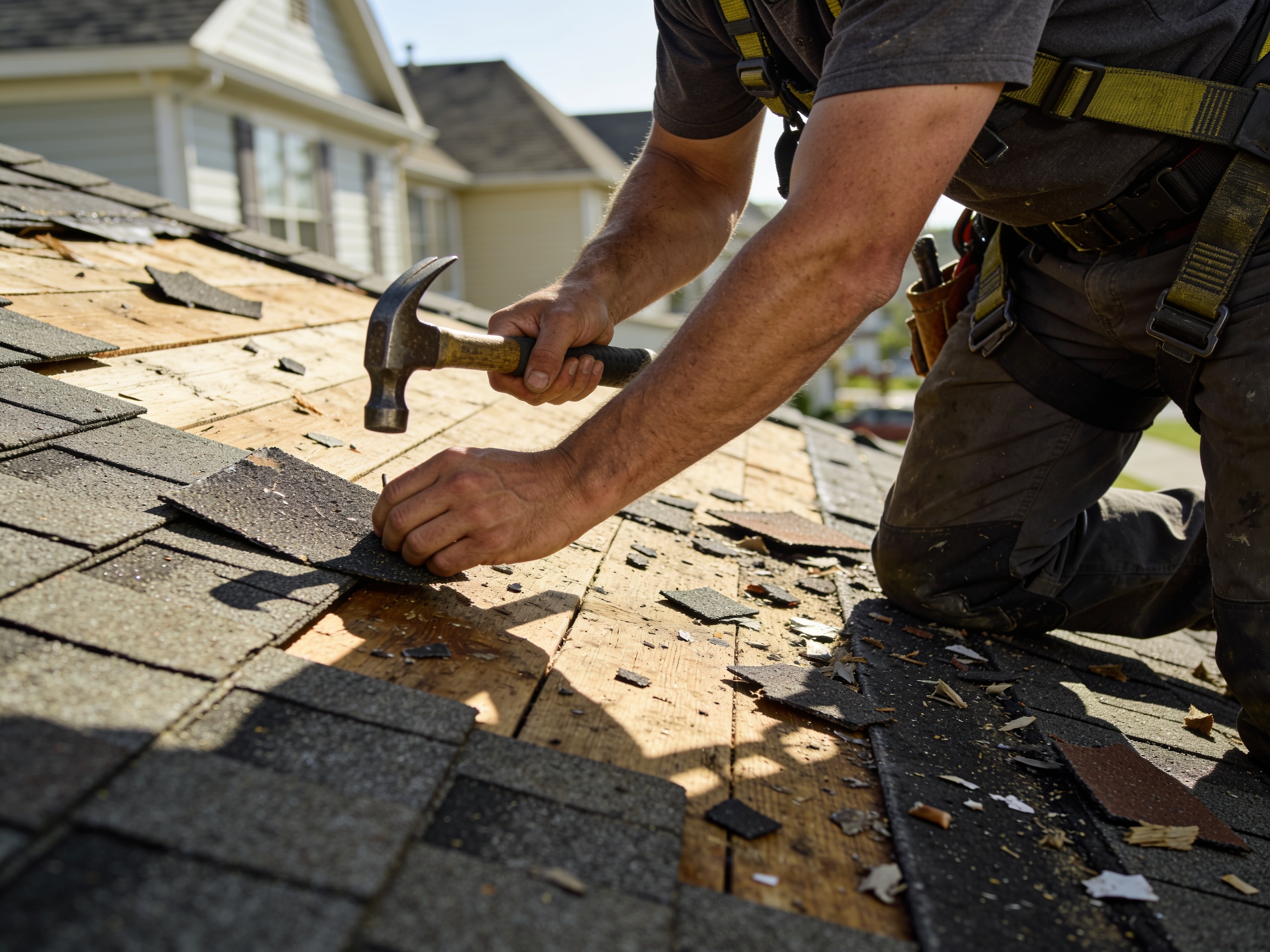
Fort Worth experiences humid subtropical conditions with intense summer thunderstorms that deliver hail and straight-line winds capable of dislodging asphalt shingles on homes built before the 1970s in neighborhoods such as Arlington Heights and the Cultural District. These older roofs often feature multiple layers that hide underlying deck damage until water penetrates during the next rainfall. The pros we connect you with inspect for granule loss, creased flashing around chimneys near Sundance Square properties, and soft spots in plywood decks that develop after prolonged exposure to standing water in low-slope sections typical of Stockyards-area structures.
Wind-driven rain frequently forces moisture under ridge vents and into TCU-adjacent homes with gable-end construction, leading to interior staining that appears days after the storm passes. Local pros prioritize checking attic insulation saturation and sheathing integrity rather than replacing only visible shingles, since mild winters allow small breaches to expand undetected. In Downtown Fort Worth buildings with mixed tile and composition roofs, edge cases include cracked clay tiles from impact that create pathways for water along mortar joints during subsequent mild-winter drizzles.
Tarrant County soil movement from occasional heavy rains can shift roof planes on older foundations, stressing seams in ways that require targeted underlayment replacement instead of full overlays. The pros we connect you with document damage with photos from multiple angles to distinguish storm-related issues from gradual wear, helping homeowners avoid unnecessary full replacements on homes in the Cultural District where original cedar shakes may still be present under later coverings.
Technician insight
In Fort Worth, the thing that catches most people out with Storm Damage Roof Repair is how mild winters let small hail dents on older Arlington Heights roofs go unnoticed until the next summer storm pushes water under lifted shingles and into the attic space.
Wind and Hail on Cultural District Home
Following a summer thunderstorm, a homeowner in the Cultural District noticed granules in the gutter. The pros found creased flashing and deck softening from wind-driven rain. They replaced the affected underlayment and sealed the ridge. The roof remained dry through the following season's rains.
How it works
- 1
Initial Assessment
The pros we connect you with visit the Fort Worth property to examine visible impact points, check attic spaces for moisture, and photograph affected areas on roofs in neighborhoods like Arlington Heights.
- 2
Damage Documentation
Detailed notes and images capture hail dents, wind-lifted shingles, and flashing issues common after subtropical storms, focusing on homes near the Kimbell Art Museum and Stockyards.
- 3
Targeted Repair Plan
A scope outlines section replacements, underlayment patches, and sealing around penetrations while accounting for the multiple-layer roofs found in older TCU-area houses.
- 4
Repair Execution
Materials matching existing shingles or tiles are installed, with attention to proper nailing patterns that withstand future high winds in the region.
- 5
Final Walkthrough
The completed work is reviewed with the homeowner to confirm water pathways are addressed and no new leaks appear during test conditions.