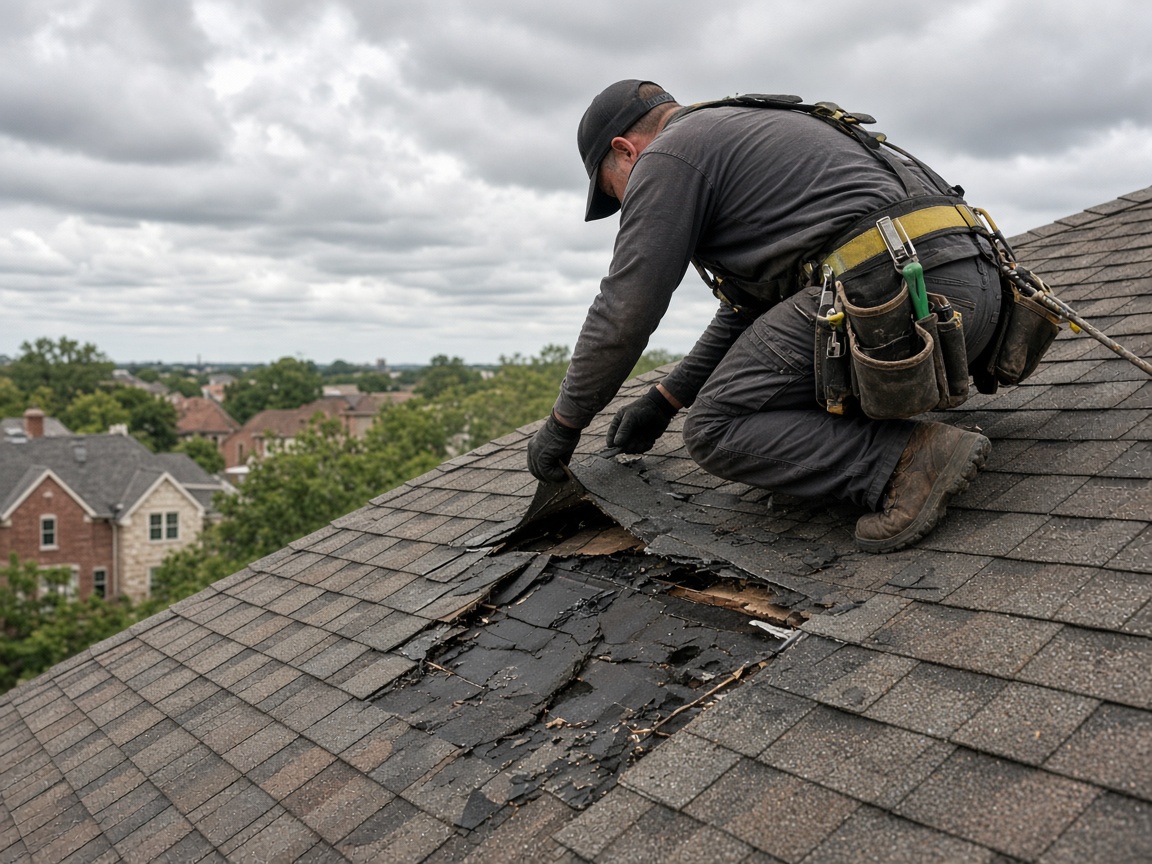
Fort Worth's humid subtropical climate brings hot summers with sudden thunderstorms and occasional hail that batter older roofs across neighborhoods such as Arlington Heights and the Cultural District. Homes built in the 1950s and 1960s often feature asphalt shingles or built-up roofing that develop seam failures and flashing issues around chimneys after repeated downpours. The pros we connect you with assess these conditions by climbing onto the roof to check for hidden water intrusion points that mild winters rarely fully dry out.
Stockyards and TCU area properties sit on relatively flat terrain where water can pool near valleys and skylights during heavy summer rains. Tarrant County building practices from earlier decades left many structures with limited underlayment protection, so even small punctures from wind-driven debris can lead to interior ceiling damage if not addressed quickly. The pros we connect you with focus on temporary tarping followed by targeted material replacement to restore the roof's integrity without unnecessary full replacements.
Downtown and Sundance Square buildings sometimes have mixed roofing systems that combine metal panels with membrane sections, creating edge cases where leaks travel along seams rather than appearing directly above the entry point. The pros we connect you with inspect attic spaces and use moisture meters to trace water paths before any repair work begins, avoiding repeated callbacks that occur when only surface fixes are applied.
Mild winter temperature swings in Fort Worth can still cause expansion and contraction in older roof fasteners, loosening them over time and creating entry points for the next storm season. The pros we connect you with prioritize matching existing materials and colors during repairs to maintain the home's appearance while addressing the immediate water threat.
Technician insight
In Fort Worth, the thing that catches most people out with Emergency Roof Repair is how summer thunderstorms send water under loose flashing on 1950s homes in Arlington Heights, where the mild winters never fully dry the decking and small interior stains appear days later.
Storm Leak in Cultural District Home
Water stains appeared on a ceiling after heavy rain in the Cultural District. The connected pros found failed flashing around a vent on an older asphalt roof. They replaced the flashing section and sealed surrounding seams to stop the intrusion.
How it works
- 1
Initial Contact
Share details about the roof issue and location in Fort Worth so the connected pros can prepare for the visit.
- 2
On-Site Assessment
The pros examine the roof, attic, and affected areas to identify the leak source and damage extent.
- 3
Temporary Protection
Quick measures such as tarping or sealing are applied to stop active water intrusion.
- 4
Repair Execution
Targeted fixes using appropriate materials restore the roof section while matching the existing structure.
- 5
Final Check
The pros verify the repair holds during a water test and confirm no ongoing issues remain.