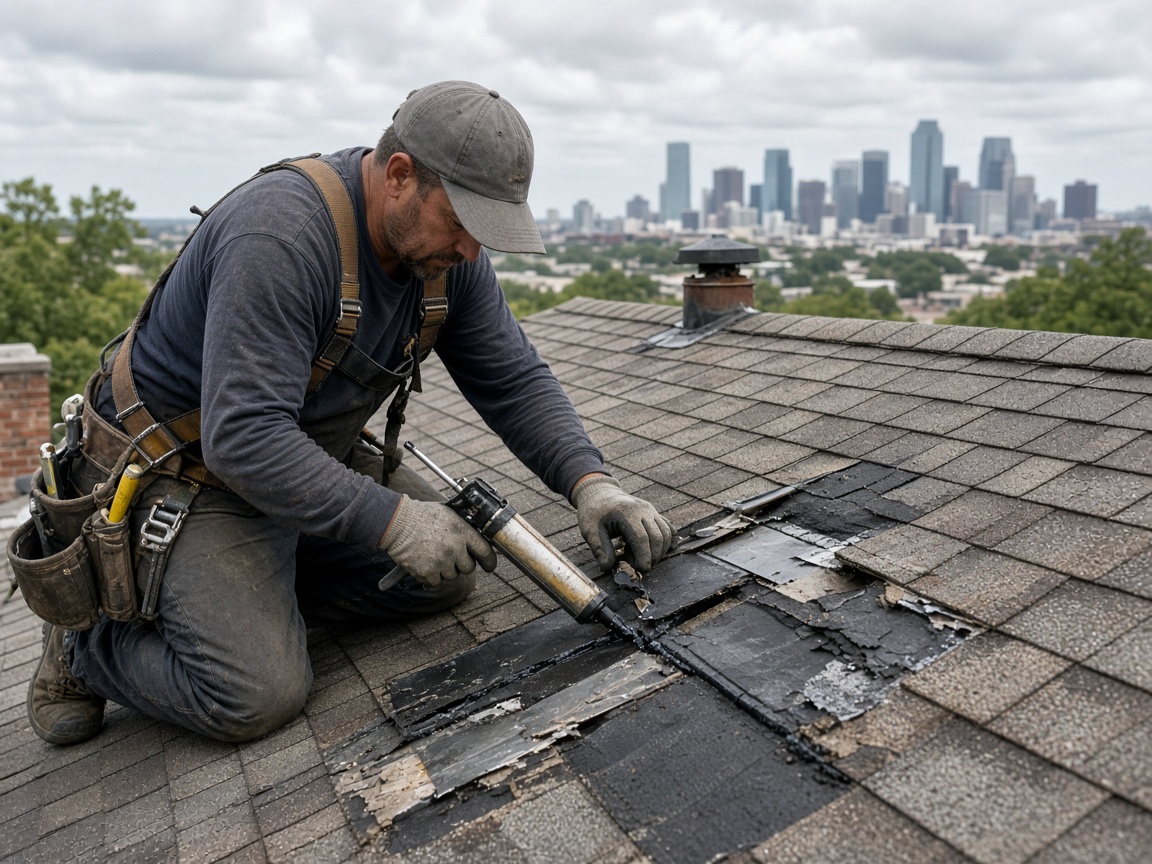
Homes in Arlington Heights and the Cultural District often feature original 1920s-1950s roofs with layered asphalt shingles that trap moisture after repeated heavy downpours common in Tarrant County. The pros we connect you with start by tracing water paths from attic insulation stains down to compromised flashing around chimneys or valleys, since humid subtropical summers keep wood decking damp long enough for rot to spread under the surface. Older stock near the Stockyards frequently shows nail pops and granule loss that let wind-driven rain enter during the brief but intense thunderstorms that hit from May through September.
TCU area bungalows and ranch homes built on slight slopes can channel runoff toward low spots where gutters meet the roof edge, creating hidden leaks that only appear after multiple storms. Local providers check for deteriorated step flashing on brick chimneys and re-seal pipe boots that crack from UV exposure plus the temperature swings between hot days and mild winter nights. They also examine soffit and ridge ventilation because poor airflow in these neighborhoods accelerates shingle aging and lets condensation form under the decking during humid periods.
Repairs in Downtown Fort Worth row houses require careful coordination around shared walls and limited access, where removing a single section of shingles can affect neighboring properties. The connected pros use matching underlayment and ice-and-water shield along eaves to address the freeze-thaw cycles that still occur on rare cold nights, preventing future leaks without full replacement. They document every step with photos so homeowners see exactly where water entered and how the fix restores the original roof profile.
Technician insight
In Fort Worth, the thing that catches most people out with Roof Leak Repair is how the humid subtropical summers keep moisture trapped under multiple shingle layers on 1940s homes in Arlington Heights long after the rain stops, turning a small flashing failure into deck rot that only shows up weeks later.
Cultural District Bungalow Leak
Water stains appeared on the ceiling after a July thunderstorm. The pros found deteriorated valley flashing where two roof planes met on the 1938 home. They replaced the flashing, added new underlayment strips, and sealed the seams to match the existing profile.
How it works
- 1
Site Assessment
The pros we connect you with examine the roof from attic and exterior, noting leak locations relative to Fort Worth's typical hip and gable designs in older neighborhoods.
- 2
Moisture Mapping
They use infrared or moisture meters to trace hidden water paths through layers common on Tarrant County homes without disturbing sound sections.
- 3
Targeted Repair
Damaged flashing, boots, or shingles are replaced with compatible materials while preserving the remaining roof surface in areas like Arlington Heights.
- 4
Final Verification
After repair, they test drainage and inspect for any secondary issues created by the humid climate before leaving the site.